Organic Mattress Materials
How to Evaluate Natural Latex in Organic Mattresses
Latex can feel springy, contouring, and remarkably different from one mattress to the next. But “natural,” “organic,” and “certified” are not interchangeable promises. To compare an organic mattress with confidence, look beyond the label: find out what the latex is made from, how it was processed, what standards apply, and how each layer works with the rest of the bed.
Published October 15, 2026
Shopping for an organic mattress can feel like learning a new vocabulary in the middle of a very personal decision. One brand highlights natural latex; another emphasizes organic latex; a third leads with a certification badge. All may sound reassuring, but those phrases answer different questions. A natural-content claim concerns the source of the material. An organic claim concerns how the relevant agricultural raw material was produced and whether it meets a defined standard. A certification indicates that a product, material, or process has been assessed against particular criteria—but the exact scope matters.
Latex deserves this closer look because it is not just a single ingredient. It is a processed material made into foam, and its feel and performance depend on the latex recipe, manufacturing method, layer thickness, firmness, and surrounding components. Understanding those details can help you choose a mattress that suits your comfort preferences without asking a label to prove more than it actually does.
First, understand what “natural latex” means
Natural rubber latex begins as sap collected from rubber trees, most commonly Hevea brasiliensis. The sap is processed and transformed into a resilient foam. That origin distinguishes natural rubber from synthetic rubber, which is made from petrochemical feedstocks, but it does not tell you the exact proportion of each material in a mattress layer.
Some latex foam is made primarily from natural rubber. Other products use a blend of natural and synthetic rubber. Blending can be a legitimate manufacturing choice, and it does not automatically mean a mattress is poor quality. It does mean that a shopper seeking a high natural-rubber content should ask for the percentage and check whether it applies to the latex foam itself or to the entire mattress. Those are very different calculations: a mattress also contains a cover, quilted layers, adhesives or other joining methods, and possibly coils or additional foam.
Watch for wording that sounds precise but is not. “Natural feel,” for example, describes an experience, not necessarily a material source. “Made with natural latex” confirms the presence of natural rubber but may not reveal how much is present. If the percentage is not published, ask the manufacturer to clarify in writing. A clear answer is more useful than a string of broad green-sounding claims.
It is also important to separate latex from latex allergy concerns. Natural rubber latex can contain proteins associated with allergic reactions, although processing and exposure vary. People with a known latex allergy should consult a qualified healthcare professional and ask the manufacturer for specific information about the finished product. Do not assume that “organic” or “washed” means allergy-safe.
Organic is a standard, not a synonym for natural
Natural describes a material’s origin in broad terms; organic refers to production under a particular set of rules. For rubber-tree latex, a credible organic claim should be supported by documentation that identifies the standard, the certified material, and the organization responsible for verification. The claim may apply to the latex ingredient rather than every part of the finished mattress.
That distinction matters. A mattress could contain certified organic latex while using a non-organic textile cover or other components that are not part of the same certification. Conversely, a finished-product certification may assess a wider set of requirements than the sourcing of one ingredient. Neither arrangement is automatically misleading, but the language should be specific enough to explain what is covered.
Ask whether the certification is current, whether it applies to the latex foam or the complete mattress, and whether the manufacturer can provide a certificate or certification details. Check the certifier’s own database or public documentation where available. A logo on a product page is a useful lead, not a complete explanation.
Organic certification also does not necessarily establish every quality a shopper might care about. It should not be treated as proof that a mattress is the most durable, the most comfortable, free of every chemical of concern, or suitable for a particular health condition. Those questions call for different kinds of evidence.
What common certifications can—and cannot—tell you
Certification names can help shoppers make sense of complex supply chains, but each has a defined scope. Read the criteria rather than relying on a badge as a catch-all guarantee.
- GOLS: The Global Organic Latex Standard is associated with certified organic latex and requirements that can cover processing and chain-of-custody considerations. Verify what product or material the specific certificate covers and review the current standard details.
- GOTS: The Global Organic Textile Standard applies to textiles and their processing. It may be relevant to a mattress cover made with certified organic fiber, but a textile certification is not, by itself, proof that the latex core is organic.
- OEKO-TEX Standard 100: This standard tests textile or product components for certain harmful substances within its criteria and product class. It is not an organic-sourcing certification and does not establish that latex is natural.
- Other emissions or material programs: Some programs assess emissions, restricted substances, or manufacturing practices. Their meaning depends on the program’s rules, test methods, and the specific product covered.
One mattress may carry more than one certification because different parts of it are evaluated under different standards. That can be helpful, provided the company explains which certificate relates to the latex, which relates to the cover, and which applies to the finished product. If the answer is simply “the mattress is certified,” ask for the full name of the standard and its scope.
Certification systems and requirements can change. For a decision that depends on a particular claim, consult the standard owner or certifier directly rather than relying on an old article or a retailer’s summary. Keep a copy of the product specification and the certificate details you used when making your choice.
How latex becomes a mattress layer
Latex foam is commonly made using one of two processes: Dunlop or Talalay. Both turn liquid latex into foam, but their production methods differ. In broad terms, Dunlop latex is poured into a mold, vulcanized, and washed. Talalay manufacturing includes additional steps, such as vacuum expansion and freezing before vulcanization. The processes can produce different structures and available specifications, but the names alone do not tell you whether a layer is organic, how it will feel to you, or how long a mattress will last.
People often describe Dunlop as denser or more supportive and Talalay as lighter or more buoyant. Those descriptions can be useful starting points, not dependable rules. Formulation, firmness, thickness, quilting, and the mattress’s other layers all affect the finished feel. Two Dunlop layers can feel unlike each other; a well-designed mattress may also use more than one latex type or firmness.
Ask what process the manufacturer uses, but give equal attention to the information that helps you assess the whole construction. How many latex layers are there? What is the thickness of each? What firmness or density information is available? Is the latex a comfort layer, a transition layer, a support core, or some combination? A brief construction diagram or written layer list can make these answers much easier to compare.
“Latex mattress” does not necessarily mean the whole mattress is latex. Some designs combine latex with pocketed coils, a foam base, or other materials. A hybrid can be a thoughtful choice, but the description should identify the components rather than letting the most appealing material stand in for the entire build.
The recipe is only part of the comfort story
Latex is valued for a buoyant response: it compresses under pressure and tends to rebound when that pressure is removed. Some sleepers enjoy the feeling of being supported on the mattress rather than sinking deeply into it. Others may prefer a softer, slower-moving surface or may find latex too springy. There is no universal best feel, and “natural” does not mean automatically comfortable.
Firmness labels are not standardized across every brand. One company’s medium may feel noticeably firmer than another’s. Your body weight, sleeping position, shoulder and hip shape, and personal comfort preferences all influence how a mattress feels. A side sleeper may look for enough cushioning to reduce pressure around the shoulder and hip; a stomach sleeper may prioritize a surface that keeps the body comfortably supported. These are starting points, not medical rules.
Latex can also feel different depending on the layers above and below it. A thick, soft comfort layer may create a more cushioned surface, while a firmer support layer can affect how much the mattress settles. A stretchy knit cover may allow the layers to respond more freely than a tightly quilted cover. A mattress’s overall construction—not a single latex label—shapes the experience.
Whenever possible, try the mattress in a way that reflects your usual sleeping position and ask about the home trial, return costs, and exchange conditions before ordering. If an in-person test is not available, review the sleep-trial terms carefully. Check whether the trial has a minimum break-in period, who pays for pickup, and whether fees or exclusions apply.
Durability depends on more than a natural origin
Latex is often chosen for resilience, but no material makes a mattress indestructible. Long-term performance depends on formulation, foam quality, layer thickness, construction, how the bed is used, and how it is cared for. A strong claim about lifespan should be supported by a clear warranty and realistic guidance—not just an appealing adjective.
Read the warranty for the details that affect your household: the length of coverage, what counts as a defect, the required bed foundation, and whether impressions or sagging are covered only after reaching a specified depth. A warranty is not the same as a promise that the mattress will feel unchanged for its entire term. It is a contract with particular conditions, so the fine print deserves a quick look before checkout.
Ask about care as well. Some latex components should not be soaked, exposed to direct sunlight, or cleaned with harsh products. The mattress cover may be removable but not washable; a removable cover does not necessarily mean it can go into a washing machine. Follow the manufacturer’s instructions and use a compatible, properly fitted protector if one is recommended.
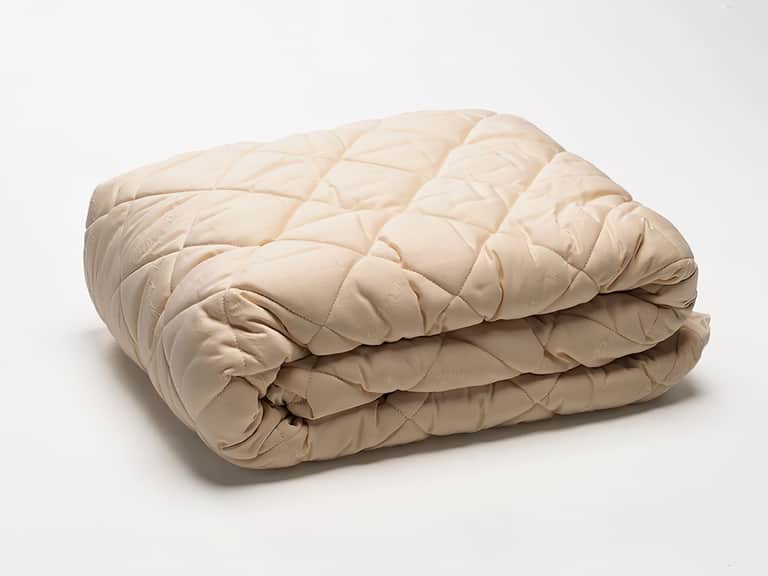
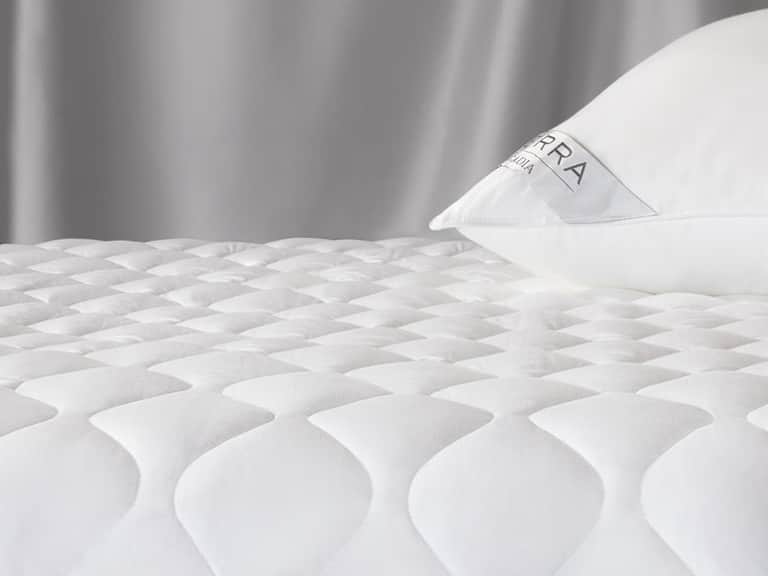
A mattress protector can help guard against spills, skin oils, and everyday wear, but waterproof materials differ in breathability and construction. Check that the protector fits the mattress depth and does not bunch or strain the cover. For a natural-material bed, look for an honest description of the protector’s fabric and barrier rather than assuming that a “green” name guarantees a particular composition.
A practical checklist for comparing organic latex mattresses
Before making a decision, collect the same information for each mattress. Comparing like with like makes it easier to separate a convincing material story from a genuinely transparent product description.
- Identify the latex source. Is the foam natural rubber, synthetic rubber, or a blend? If a blend is used, what percentage is natural rubber, and how is that percentage calculated?
- Confirm the organic claim. Which material is certified organic? Is the certification current, and can you verify its scope through the certifier or standard owner?
- Separate ingredient and product claims. Does a certificate apply to the latex layer, cover fabric, or finished mattress? Do not assume one certification covers every component.
- Get the layer breakdown. Ask for the material, thickness, and role of each layer, including the support core, comfort layers, cover, and any other foams or textiles.
- Ask about the manufacturing method. Find out whether the latex is Dunlop, Talalay, or another specified construction, while remembering that the process name does not establish organic status or personal comfort.
- Assess fit and feel. Compare firmness guidance, your preferred sleep position, available trial terms, and the mattress’s compatibility with your bed base.
- Review care and warranty terms. Understand cleaning instructions, cover limitations, required foundation types, and the conditions for warranty claims.
- Request plain-language documentation. A useful answer should identify materials and standards clearly. Save the product details and written responses for reference.
If a company cannot provide a precise answer, that does not automatically establish that the product is unsafe or unsuitable. It does mean the claim is harder to verify. Decide whether the missing information is important enough to keep comparing other options.
Green claims, sourcing, and the bigger picture
Choosing organic latex can be part of a broader effort to understand how household goods are made, but environmental impact is not captured by one label. Consider the full life cycle: where the raw material comes from, how it is processed, what other materials are used, how far the mattress travels, how long it remains comfortable, and what happens when it is no longer usable.
Rubber trees are agricultural crops, so sourcing and land management matter. A responsible evaluation asks whether a company provides traceability or meaningful sourcing information, not simply whether it uses the word “sustainable.” Manufacturing, transport, packaging, and mattress longevity also contribute to the overall picture. A product that lasts longer in a real household may be a more practical choice than one with impressive claims but limited useful life.
Be cautious with sweeping phrases such as “chemical-free.” All physical materials are made of chemicals in the scientific sense; the useful question is which substances are present, what standards or testing apply, and whether those criteria match your concerns. Clear, qualified language is more informative than an absolute promise.
Also distinguish environmental credentials from health claims. A certification or natural material designation should not be presented as proof that a mattress prevents illness, treats allergies, or improves sleep for everyone. It can help explain sourcing or testing, while personal health outcomes depend on many factors.
Questions worth asking before you buy
A brief conversation with a manufacturer or retailer can reveal whether a product description is genuinely transparent. Keep the questions concrete:
- What proportion of the latex foam is natural rubber, and is any synthetic rubber included?
- What does “organic” refer to in this specific mattress?
- Which certification applies to the latex, and can you provide the certificate details or a way to verify them?
- What are the materials and thicknesses of every mattress layer?
- What is the latex manufacturing process, and what firmness options are available?
- How should the mattress be supported, cleaned, and protected?
- What are the trial, exchange, return, and warranty conditions?
Notice whether answers are direct and consistent. If the product page says one thing and a representative says another, ask for written clarification. Clear documentation makes it easier to compare options and revisit the decision later.
The bottom line
Natural latex can be a compelling material in an organic mattress, but the label is only the beginning of the evaluation. “Natural” speaks to origin; “organic” depends on a defined standard and verified scope; and “certified” is meaningful only when you know what was assessed. The manufacturing process, layer design, cover, firmness, care requirements, and warranty all influence what you will actually bring home.
Look for specifics rather than sweeping assurances. Verify the certificate, ask for a complete layer breakdown, consider the feel you prefer, and read the trial and care terms before committing. With those pieces in view, you can weigh the material story against practical comfort—and choose an organic latex mattress on the strength of what it is made of, not just what its label suggests.